
Many people believe that dentures will remain functional until the end of their life. The concept appears appealing, yet things happen differently in real life. Your mouth experiences continuous transformations throughout your life, even when you don’t have natural teeth. The process leads to gums that shift, jaw structure alterations, and gradual changes that affect how dentures fit through daily use.
A quality denture set enables you to express happiness through smiling while restoring your ability to eat and improving your comfort during chewing and speaking activities. The best dentures also require continuous maintenance and updates throughout their existence.
How Long Do Dentures Usually Last?
Most dentures last between five and ten years. Some may last longer with proper care, while others may need work much sooner. The life of dentures depends on several things:
- Daily cleaning habits
- Changes in the jawbone
- Gum health
- Teeth grinding
- Diet choices
- General wear over the years
Think about a favorite pair of shoes. Even when they still look fine, they may not feel as comfortable after years of use. Dentures work in a similar way. Small changes slowly build up until the fit no longer feels right.
What Happens When Dentures Get Old?
Old dentures often stop fitting the way they once did. This can affect daily life more than many people expect. Some people notice sore spots during meals. Others struggle to pronounce certain words clearly. In many cases, patients begin to avoid foods they once loved because eating feels harder.
Here are common signs that dentures may need an adjustment or replacement:
- Dentures start to feel loose.
- Clicking sounds happen while talking.
- Gum pain becomes common.
- Cracks or worn teeth appear.
- Mouth sores develop often.
- Eating feels harder than before.
- Facial shape begins to change.
These issues may seem small at first, but they can grow worse over time.
Why Does the Fit Change?
Even without natural teeth, the jawbone continues to change shape over the years. Bone loss happens slowly, which means dentures that once fit well may no longer sit properly.
This change explains why many people need updates even when the dentures still look good from the outside.
The team at Perdido Bay Dental also helps patients explore implant supported options that improve stability and comfort for many people with loose dentures.
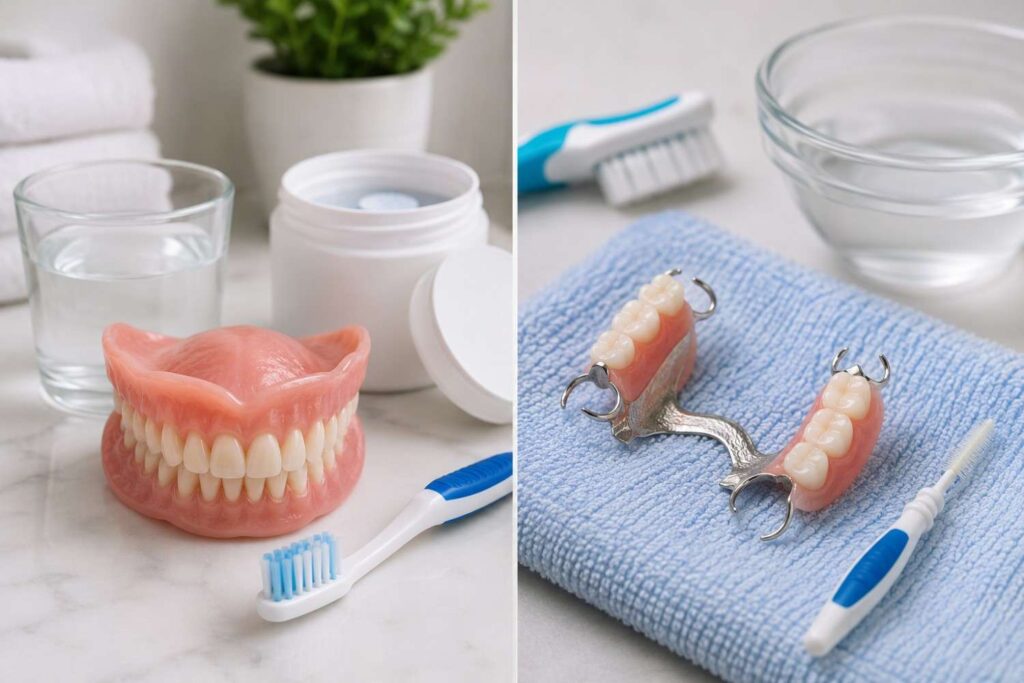
Full Dentures and Partial Dentures Need Different Care
Not every patient wears the same type of denture. Some need full dentures, while others wear partial dentures.
Here is a simple look at the difference:
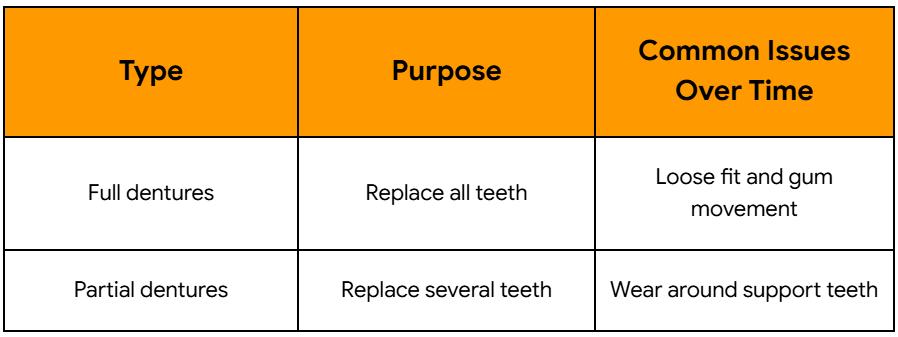
Patients with partial dentures should also pay close attention to the health of nearby natural teeth. Damage or decay in those teeth can change how the denture fits.
Can Dentures Be Repaired Instead of Replaced?
Sometimes yes. Small cracks, worn areas, or loose fits may only need adjustments. Relining is one common fix. This process reshapes the inside surface of dentures, so they sit better against the gums. Some patients only need this type of update instead of a full replacement.
An on-site lab can make this process easier and faster for patients. Perdido Bay Dental provides same day relines and repairs for many denture patients. Still, repairs cannot solve every issue. If dentures become badly worn or no longer support the mouth properly, replacement may be the better choice.
How Can You Make Dentures Last Longer?
Daily habits matter more than many people realize. A patient who cleans dentures well and visits the dentist often will usually get more years from them.
Here are smart ways to extend denture life:
- Clean dentures every day.
- Remove them at night when advised.
- Handle them gently during cleaning.
- Keep dental visits regular.
- Avoid using very hot water.
- Store dentures safely when not in use.
One patient once shared that her dentures slipped during dinner at a family event because she ignored small fit issues for months. She thought the problem would pass on its own. Instead, the loose fit kept getting worse. After a denture adjustment, meals felt normal again.
Stories like this happen often. Many people wait too long before getting help.
How Often Should You Visit the Dentist with Dentures?
Even denture wearers should see the dentist regularly. Many people skip visits because they think dentures remove the need for exams.
That is not true. Regular visits help dentists check:
- Gum health
- Denture wear
- Bone changes
- Oral sores
- Fit problems
These visits often catch issues before they become painful or expensive.
Bring Comfort Back to Your Smile!
A good denture fit can change daily life in ways that matter. People observe that eating food becomes simpler, their speech improves, and their ability to smile returns to normal. If your dentures feel loose, cause pain, or no longer fit the way they once did, now may be the right time for an exam.
At Perdido Bay Dental, we help patients find solutions that restore comfort and confidence. Our expert and well-experienced team offers denture care, repairs, relines, and implant options designed around your needs.
Frequently Asked Questions
How do I know my dentures no longer fit?
Dentures that slip, rub the gums, click during speech, or make eating harder often need attention. A dental exam can confirm whether repair or replacement is needed.
Can dentures last more than ten years?
Some dentures last longer with excellent cleaning and regular dental care. Still, mouth changes over time usually make updates necessary for comfort and proper function.
Do loose dentures damage the mouth?
Yes. Loose dentures can irritate the gums, create sore spots, and make chewing difficult. Long term poor fit may also affect facial support and comfort.
Are implant dentures easier to wear?
Many patients find implant supported dentures more stable and comfortable. They often reduce slipping and help patients eat foods that regular dentures may make difficult.
Should partial dentures be replaced too?
Yes. Partial dentures wear down over time just like full dentures. Changes in nearby teeth and gums can also affect how well they fit and function.