

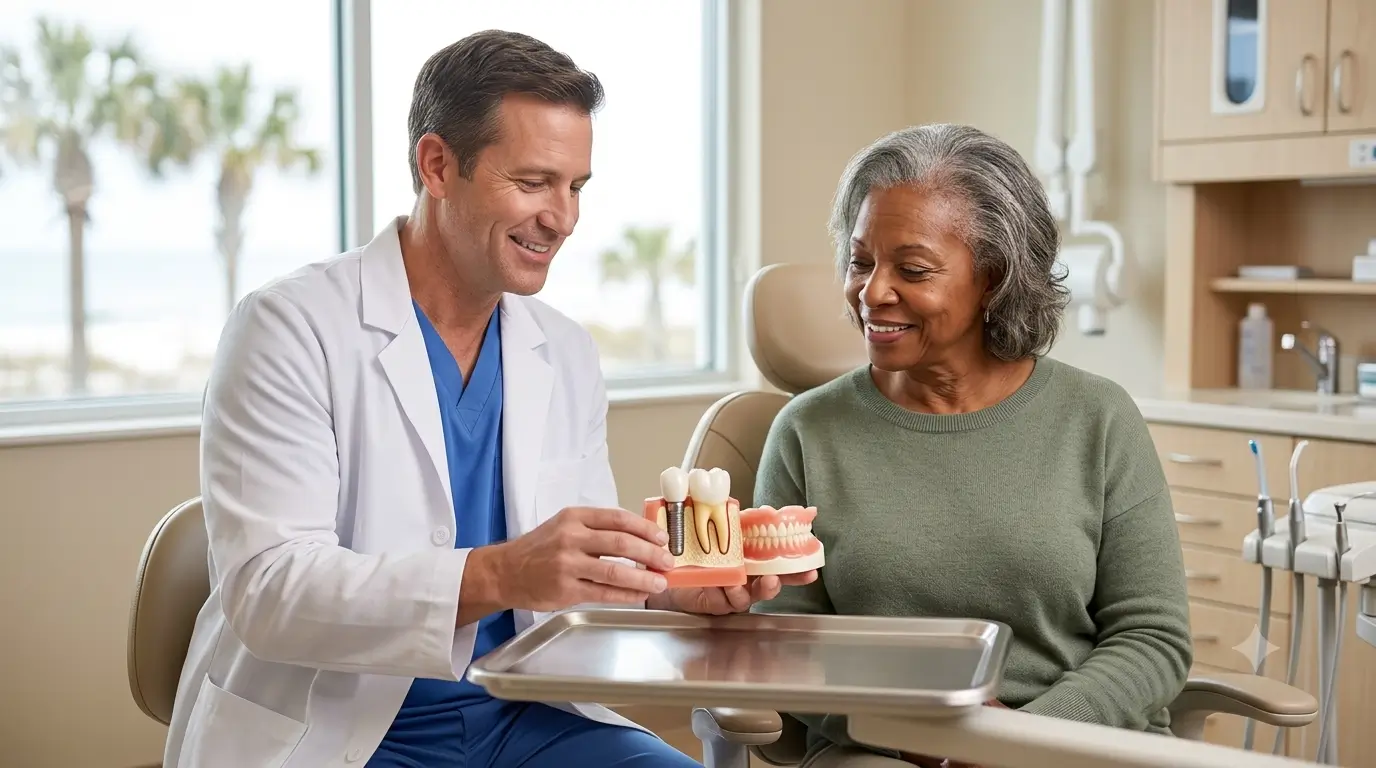
Dental problems can happen to anyone, even with good oral hygiene. When a tooth becomes badly damaged or cannot be repaired, there are several treatment options available. Understanding treatments such as Tooth Extractions, Dentures, and implant dentistry can help you make informed decisions about your dental health.
A trusted Dentist will always try to save your natural teeth whenever possible. However, when that is no longer an option, modern dentistry offers reliable ways to restore both your smile and your ability to chew comfortably.
When Are Tooth Extractions Needed?
Tooth Extractions are recommended when a tooth is too damaged to be repaired. This may happen because of severe decay, advanced gum disease, a large fracture, or an infection that cannot be treated successfully.
Although many people feel nervous about having a tooth removed, modern techniques make the procedure much more comfortable than most expect. Local anesthesia numbs the area, allowing the Dentist to perform the extraction with minimal discomfort.
After the procedure, patients receive instructions to help the area heal properly and reduce the risk of complications.
Replacing Missing Teeth with Dentures
Once a tooth has been removed, replacing it is often recommended. Leaving empty spaces can affect your bite and allow nearby teeth to shift.
Dentures remain one of the most common solutions for replacing multiple missing teeth. They are custom-made removable appliances designed to restore both appearance and function.
Benefits of Dentures
- Lower initial cost
- Non-surgical treatment
- Improved chewing ability
- Better support for facial muscles
- Faster treatment for many patients
The main disadvantage is that dentures may require adjustments over time as your gums and jaw naturally change.
Understanding Implant Dentistry
Many patients today choose implant dentistry because it offers a more permanent solution.
Implant dentistry uses titanium posts that are placed into the jawbone to replace missing tooth roots. Once healing is complete, replacement teeth are attached to the implants. This treatment provides excellent stability and closely mimics the function of natural teeth.
Patients missing several teeth may benefit from Dental Implants, while those who have lost nearly all of their teeth may qualify for full dental implants that support an entire set of replacement teeth.
Dentures or Dental Implants?
Choosing between Dentures and Dental Implants depends on several factors.
Dentures may be the better choice if:
- You want a more affordable solution.
- Surgery is not recommended.
- You need to replace many teeth quickly.
Dental Implants may be the better choice if:
- You want maximum stability.
- You are looking for a long-term solution.
- Your jawbone is healthy enough for implant placement.
Your Dentist will evaluate your oral health and explain which treatment best matches your needs.
Cosmetic Crowns and Cosmetic Bridges
Not every damaged tooth needs to be removed. Sometimes Cosmetic Crowns can strengthen and protect a weakened tooth. In other situations, Cosmetic Bridges and cosmetic bridge teeth can replace one or several missing teeth without placing implants.
Each treatment has its own advantages, and your Dentist will explain why one option may be more suitable than another.
A Personalized Treatment Plan
No two patients have the same dental needs. Age, oral health, bone strength, budget, and personal preferences all influence the best treatment choice.
Whether you need Tooth Extractions, Dentures, implant dentistry, Cosmetic Crowns, Cosmetic Bridges, Dental Implants, or full dental implants, your Dentist will create a treatment plan designed specifically for you.
Restoring your smile is about more than appearance. It helps improve comfort, confidence, and overall oral health. With today’s dental treatments, there are more effective options than ever to help you enjoy a healthy smile for years to come.